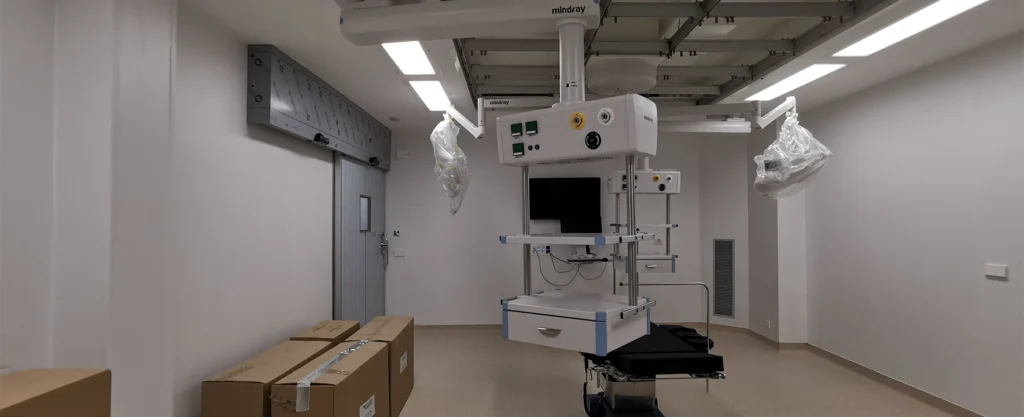
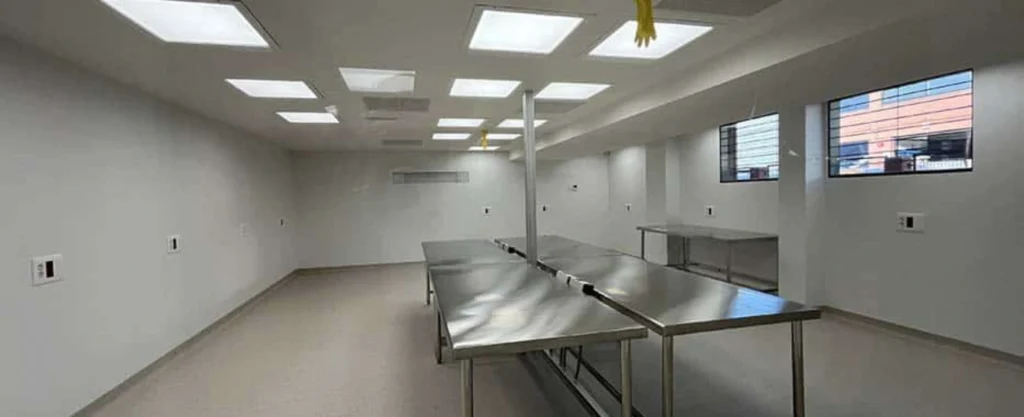
Clean rooms
We design and optimize controlled environment rooms or cleanrooms with the highest standards of particle control, air flow and environmental safety. We accompany our clients in the implementation of innovative and efficient solutions, integrating sustainable strategies, digital design and experience in regulations such as ISO 14644 and GMP, to guarantee ultra-clean and highly controlled environments.
Controlled environment rooms or cleanrooms are rooms designed to reduce air pollution as much as possible, maintaining an aseptic environment.
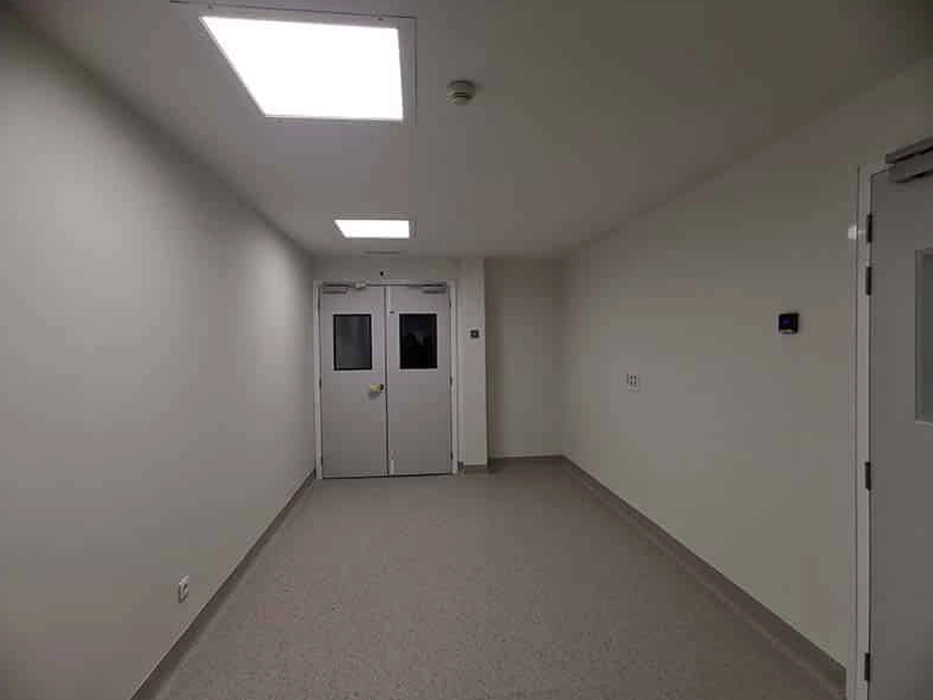
Architecture of controlled environment rooms
In clean rooms, the need to focus the design and construction of the interior walls on the non-generation of pollution requires the development of an interior architecture system that, through the use of specific materials and solutions, achieves suitable finishes and a total integration of the rest of the facilities.
Controlled environment room engineering
For the engineering design of the rooms there are critical conditions according to the application standards, such as:
- Temperature and humidity:
The point chosen and the limits can be very specific and variable depending on the process to be developed in the clean room.
Each case needs to be studied in depth, as there are no regulatory guidelines in some processes.
A typical range for humidity is usually from 30 to 65% and from 20 to 24 °C for temperature.
- Temperature control: The required temperature control must be indicated, as stated in the UNE 14644 standard itself, to take it into account not only in the process itself but in function of the equipment and materials of the room, but also for the stability of the conditions for the clothing of the staff and to allow the specified cleaning class. At this point, the following must be taken into account:
- Lighting loads are high but stable over time.
- Process loads tend to be very variable and generally high.
- Occupation charges are variable, and may be increased according to the process.
- Humidity control: The factor that most contributes to its variability are external influences (necessary renewal air) rather than the internal variations of the treated space.
- If the process has evaporation phenomena in the clean room, they must be confined with specific vented outlets.
- If the process requires very low relative humidity (some pharmaceutical products or manufacturing processes may require humidity below 35%), precautions must be taken with the selection of materials that minimize electrostatic effects.
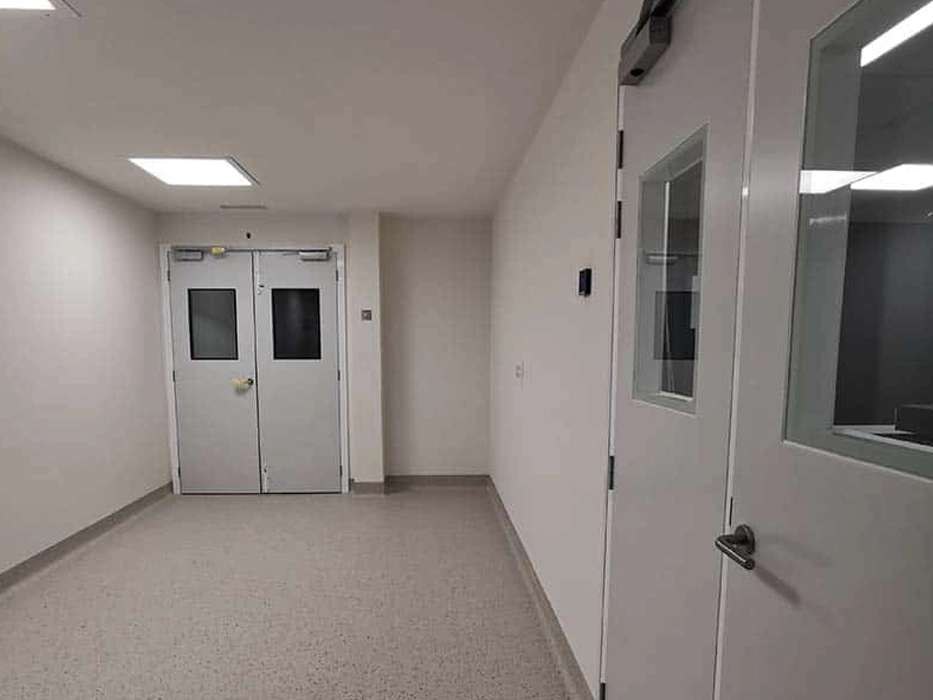
- Filtration levels: Although specific standards must be used for the selection of the filtration system, it is convenient to highlight some points indicated in UNE 14644 as a recommendation:
- A pre-filter of the outside air is recommended to ensure adequate quality in the air treatment unit. In line with RITE, a combination of G4 and F7 filters may be suitable.
- A second filter is recommended in the air treatment unit to protect the terminal filters. An F9 is usually the usual.
- Terminal filtering: very dependent on the category of the filter according to the process and classification to be obtained. In some cases, a HEPA filter must give way to a ULPA.